Most winter days in Broken Bow and Hochatown are mild. The trouble is the handful that are not: an ice storm that takes out power on a Friday, or a hard freeze that arrives while the cabin is empty and you are three hours away in Dallas. A burst pipe in an empty cabin can run for days before anyone notices. This checklist is for owners who will not be there when it happens, whether the cabin is rented or not.
General guidance, not a substitute for a licensed plumber, electrician, or your insurer's own requirements. If your policy or your cabin's builder specifies something different, follow that.
Before the first hard freeze (do this in October or early November)
- Know where the main water shutoff is, and make sure whoever checks the cabin knows too. Label it. If a pipe bursts, this is the first thing anyone will need.
- Insulate exposed pipes in crawlspaces, under-deck runs, and exterior walls. Foam sleeves are cheap; a flooded crawlspace is not.
- Disconnect and drain garden hoses, and cover outdoor spigots.
- Service the heat. Have the HVAC checked and change the filter, so the system that keeps the pipes warm is not the thing that fails.
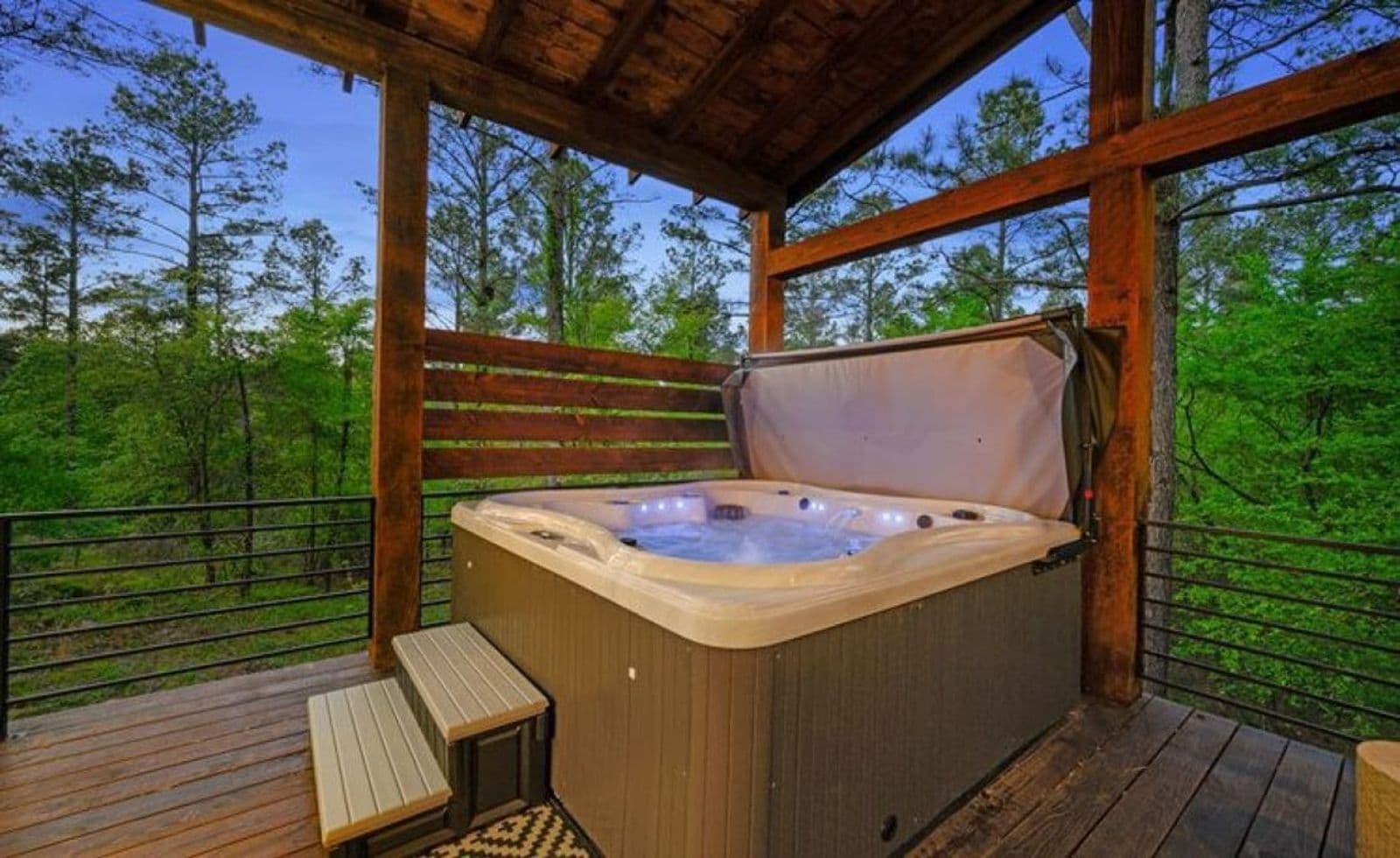
- Check the hot tub cover for tears and a good seal, and confirm the tub's freeze-protection setting is on. More on the tub below.
- Test smoke and carbon monoxide detectors, especially if the cabin has a fireplace or gas appliances.
- Set up remote monitoring if you can: a smart thermostat or temperature sensor that alerts your phone when the cabin gets cold is the cheapest early warning there is.
When a hard freeze is forecast
- Keep the heat on, even when the cabin is empty. A thermostat setting around 55°F is a common recommendation for an unoccupied house; check what your insurer requires.
- Open cabinet doors under sinks on exterior walls so warm air reaches the pipes.
- Let faucets on exterior walls drip during the hardest cold. Moving water is harder to freeze.
- If guests are arriving, tell them what to leave on and what not to touch, and make sure they know not to turn the heat off when they leave.
The hot tub in winter
A filled hot tub is one of the most expensive things in the cabin to lose to a freeze. As long as it has power and is running, its own circulation and heater usually protect it. The risk is a power outage: without power the water stops moving, and pumps and plumbing can freeze and crack.
- Keep the tub running and the cover on through the cold months rather than leaving it filled and switched off.
- Do not drain a tub in freezing weather unless the lines can be fully blown out; water left in the plumbing is what freezes.
- If the power goes out in a freeze and does not come back quickly, someone needs to check the tub.
Hot-tub work on every Frontier plan is performed with our partner Broken Bow Hot Tub Co., who can winterize a tub properly if you are closing the cabin for the season. See also how often a cabin hot tub needs service.
When a storm knocks out power
- Find out how long it will be out. Check the electric cooperative's outage map before you assume the worst.
- Roads come first. Hochatown's hills and gravel drives ice over quickly. Nobody should be sent up an icy drive to check a cabin; wait until it is safe.
- If there are guests, they need to know where the breaker panel, flashlights, and main water shutoff are, and who to call. Our storm post for guests covers the guest side.
- A generator only helps if it is installed correctly and someone can run it. A portable generator must never run inside the cabin or a closed garage.
After the storm: the walkthrough
The most important thing after a freeze or a storm is that someone actually walks the cabin, because damage in an empty house is silent until it is expensive. The walkthrough should cover:
- Water: under every sink, around the water heater, in the crawlspace, and at every exterior spigot.
- Heat: is the cabin at its set temperature, and is the system running?
- The hot tub: water temperature, circulation, and any error codes.
- The roof, gutters, and deck for fallen limbs and ice damage.
- Photos of anything that needs attention, so you can decide from wherever you are.
Who checks the cabin when you can't?
If you live out of town, the honest answer to this whole article is: someone local. That is the gap our services fill. Second home care includes a monthly visual check and hot-tub attention, and extra freeze or storm checks are added by agreement. Local support covers freeze prep, post-storm walkthroughs, and vacancy checks for self-managed rentals. Either way, tell us about the cabin before the first freeze, not after it.